- Needle Newsletter
- Posts
- AI Winter Is Coming In 2024 🌨️


Talking about winters, let's not forget how Germany turns into a freezer during this season. Stepping outside? You'd better dress like an onion - in layers, and lots of them! And speaking of cold times, there's this talk about an 'AI Winter' coming up in 2024. Rodney Brooks, a big name in AI, thinks we might be hitting a slow patch in AI stuff soon. After all the buzz and rush around AI, he reckons things might cool down a bit, like the AI world is about to put on its own winter coat. 🧊
Today we have for you:
AI Winter is coming in 2024
AI Opportunities in Germany
OpenAI backed company raises $100M
Create custom embedding models using LLMs
AI Winter Is Coming In 2024
Rodney Brooks, predicts an 'AI Winter' in 2024, suggesting a slowdown in AI progress after the recent hype. This term refers to a period of reduced funding and interest in AI research. The prediction points to large language models (LLMs) like ChatGPT, which, despite their abilities, are believed to lack true understanding and creativity. This skepticism is rooted in the history of AI, with cycles of overhyped expectations followed by disappointment. Brooks encourages practical uses of current AI but cautions against expectations of achieving Artificial General Intelligence soon.
In Germany's AI job market, there's a mix of opportunities and challenges. As AI advances, data scientists and AI engineers will be increasingly sought after for their skills in developing and deploying AI solutions. For success, technical proficiency in AI technologies like machine learning, deep learning, and natural language processing is key. Familiarize yourself with programming languages like Python and R, as well as popular AI frameworks and tools. Along with technical skills, having knowledge about the specific industry where you want to work is important. For foreign professionals, these skills and an understanding of specific industry challenges can be key to entering the market.
1X, a company backed by OpenAI, has raised $100 million to continue its work on humanoid robots. This massive investment reflects growing interest in using robots to address labor shortages. While some see humanoid robots as unnecessarily complex, supporters believe they're suited for tasks in human-designed spaces. The funds will go towards improving 1X's AI capabilities and launching NEO, their humanoid robot. This big financial push signifies confidence in 1X's future impact on the AI and robotics industries.
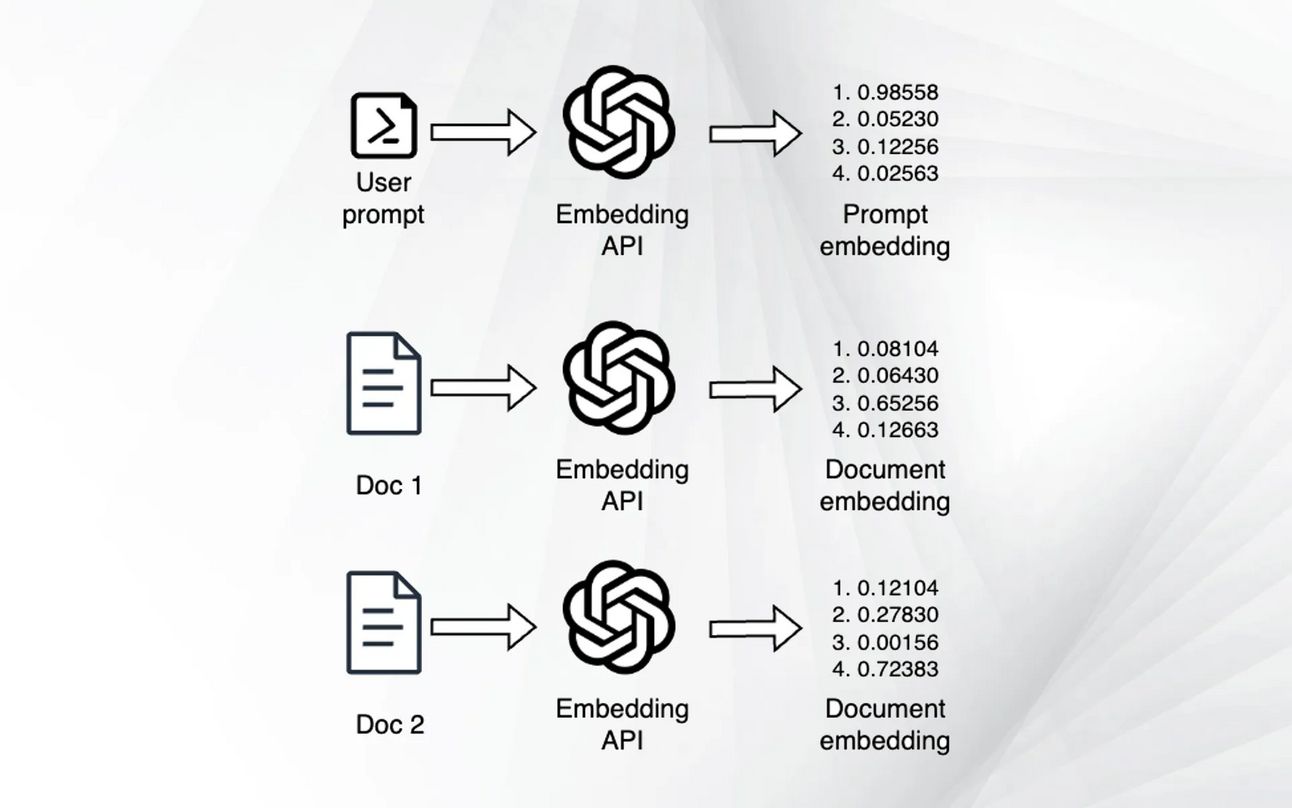
In our previous edition, we saw how LLMLingua optimizes lengthy prompts. Today, we are going to see another technique to create embeddings. Embeddings help the computer make sense of words and sentences. They are vital for deep learning, especially with big AI models that process language. But it's tough to train these models because it's complex and can cost a lot. Microsoft's new method trains embedding models in one step, not the usual two, eliminating the need for separate initial and refinement stages. It uses GPT-4 to create diverse synthetic data first and use it to train embedding model. This method saves time and reduces the computational power to greater extent.