- Needle Newsletter
- Posts
- Ex-Twitter CEO's AI Venture Bags $30M 💸

When I started writing about NY Times lawsuit I didn’t know that this will become a full part series. 😝 Well, there is a start to everything. We kicked off 2024 with Open AI got sued for copyright infringement. Now, they argue it's impossible to create useful AI models without using copyrighted material. Forget "Scandal" reruns, this legal drama is the real binge-watch of the season!
Today we have for you:
Open AI’s bold claim
Ex-Twitter CEO's AI Venture Bags $30M
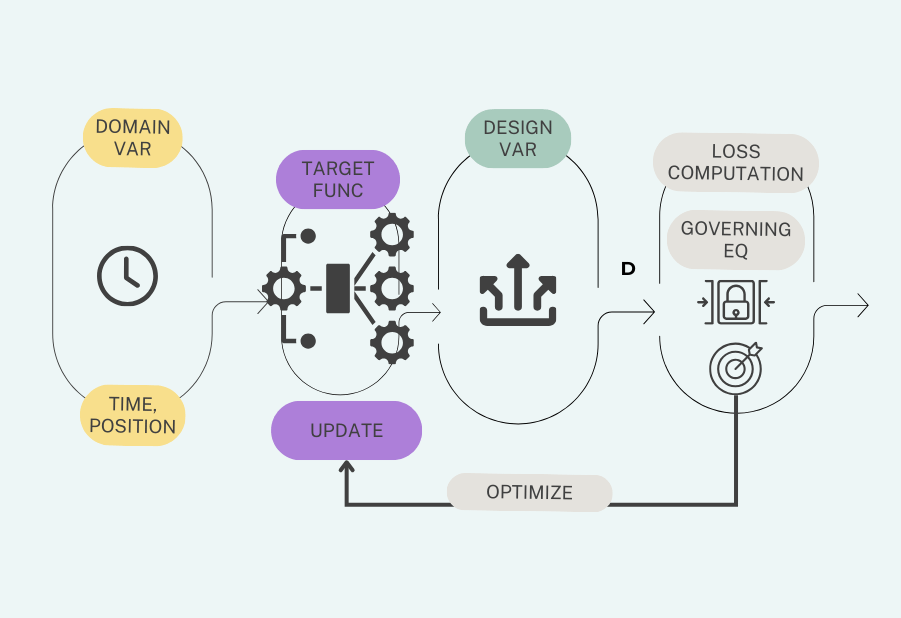
(PINNs) solves complex optimization problems
Open AI claim that AI, like ChatGPT, needs data from various sources, including copyrighted ones, to learn and understand diverse content. The issue is that current laws make it hard to use such material legally. OpenAI suggests that limiting AI to outdated, public domain data won't meet modern needs. They're fighting a lawsuit by claiming 'fair use', defending the necessity of using all available content to train AI. The outcome could set the stage for how AI and copyright laws interact in the future.
Elon, thanks for firing me; now I'm my own boss with an AI startup that's just raised $30 million! The startup, led by the former Twitter CEO, is crafting software that could revolutionize how developers work with language models, aiming to simplify the creation and use of large language models like ChatGPT. The company, backed by big names like Khosla Ventures, is keeping product details hush-hush for now. This funding is a big step toward competing in the AI space, where the potential is as vast as the technology itself.
In the world of AI and physics, finding the best solution from all possible options is a common challenge. Take, for example, the swinging pendulum problem, where we need to figure out the most efficient way to move a pendulum. Traditional methods like gradient descent or genetic algorithms can be costly and may not work well with such complex systems. Physics-Informed Neural Networks (PINNs) use a neural network architecture that's informed by physical laws to determine the loss, which is a measure of how far off the predictions are. This diagram shows how PINNs take into account the governing physical equations, constraints like the pendulum's starting and ending points, and the goal, like the shortest time to swing. By adjusting the network to minimize this physics-based loss, PINNs can efficiently solve the optimization problem and find the best solution for the pendulum's motion.
OpenAI has released a guide for better prompt crafting, addressing issues like vague responses from ChatGPT. The key steps include:
Clarity: Add clear instructions and defined steps for specific answers.
Contextual References: Include links or documents for additional context.
Break It Down: Divide complex prompts into simpler parts.
Patience and Review: Allow ChatGPT time to respond and compare its answers with high-quality responses.
Evaluate Against Standards: Compare ChatGPT's outputs with top-quality answers.
Generate a concept for a viral instagram reel related to [specific trending topic]. The reel should be engaging and shareable lasts for 30 seconds. Here’s a link to a recent viral post for inspiration: [insert link]. Outline the post in three parts: an attention-grabbing opening, the main informative content, and a call-to-action. Take time to create and refine the idea.